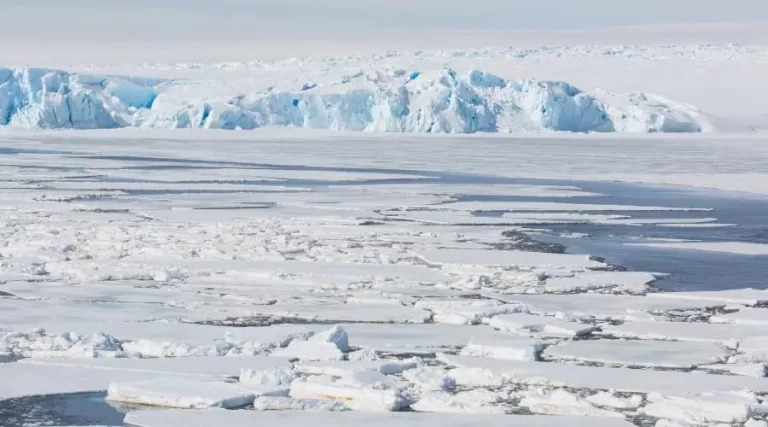
Climate Adaptation: Why Our Cities Must Let Nature In
Climate change is not always the most relatable topic for those just going about their daily lives. But the reality of changes we face is starting to hit home.
This is increasingly clear in our cities, where the effects of summer heatwaves and storms are intensifying.
But here’s the hopeful part: nature might just be our best defence!
Time to Accept Change Is Coming & Adapt
A climate-resilient city should be one capable of adapting to shocks, to heatwaves and storms, without losing its function or its soul. It is a city not just prepared to bounce back from disaster, but one that embeds systems that can thrive in a changing world.
This is not to say that a changing climate should simply be accepted. Certainly not. Action to limit climate change remains essential. But it is also essential to accept and prepare for the level of change that is now bedded into our future.
In the majority of our cities today, when solutions are sought, they are too focused on high-tech fixes and big engineering projects. But some of the most effective, affordable, and beautiful solutions are already right under our noses.
Nature-based solutions, like green roofs, urban forests, wetlands, and tree-lined streets, help cities absorb climate impacts, and deliver daily benefits. Cooler, cleaner air, cleaner water, & improved mental health is all within reach.
How Nature Can Protect (and Revive) Cities
Let’s take heat for starters. Urban areas tend to trap warmth. Concrete and asphalt absorb and radiate heat. This turns built up areas into ovens (something known as the heat island effect). Plus, if you’re inside the building, this surrounding heat leads to excess heat inside too!
Tree canopies, parks, and water features can counteract this heat effect, providing natural cooling. Studies show these features can reduce neighbouring temperatures by several degrees. Doing so can literally save lives during extreme heat events.
Then there’s water. As rainfall becomes more erratic, many cities are experiencing a rise in flash flooding. Traditional stormwater systems often can’t cope, they’re simply not built for it, and increasing their capacity can be incredibly costly and disruptive, if achievable at all.
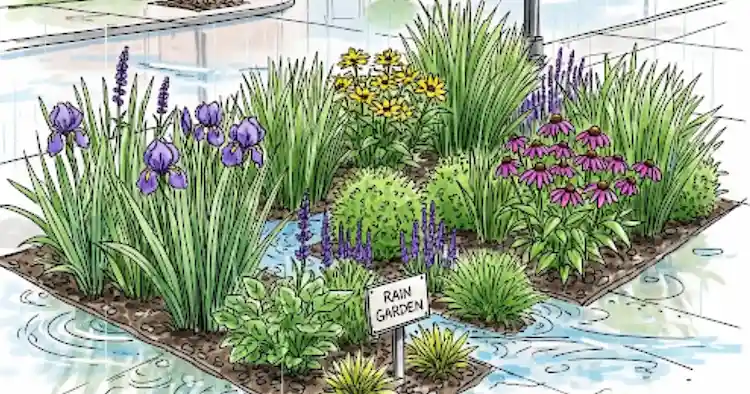
But green infrastructure, like rain gardens, permeable pavements, and restored streams, can absorb and slow runoff, reducing flood risks, all with the added bonus of helping to restore local biodiversity!
And let’s not forget our health – an issue that many find to be negatively impacted under our changing climate. Access to green space is well established as boosting our mental and physical health. It helps to lower stress, supports immune systems, and foster a general sense of belonging.
And on that note: nature builds social connection, too. A shaded park or shared garden can become a meeting point, a space for community events, a refuge in a crisis. These are things concrete can’t offer.
Cities Taking The Initiative
Some cities are showing what’s possible when nature is treated as infrastructure.
In Rotterdam, the Netherlands, public plazas double as “water squares”, dry in fair weather, but ready to collect stormwater when the rains come. Singapore has reimagined itself as a “City in a Garden,” with green roofs, vertical gardens, and lush public spaces built into its fabric. In Medellín, Colombia’s second largest city, previously neglected roadways have been transformed into “green corridors”, cooling the city and providing safe, attractive routes for walking and cycling.
These are not one-off projects the cities have pursued, they’re part of a broader shift in the thinking and approach to urban planning. And they work. They improve liveability, reduce carbon footprints, and make urban systems more flexible in the face of change.
What’s Holding The Rest of Us Back?
Despite the clear benefits, many cities still default to traditional, grey infrastructure. Why?
In part, it’s simply down to habit! Concrete, human-made solutions are familiar. We perceive them as faster and easier to control. And as in any aspect of life, we all know that habits can be difficult to change.
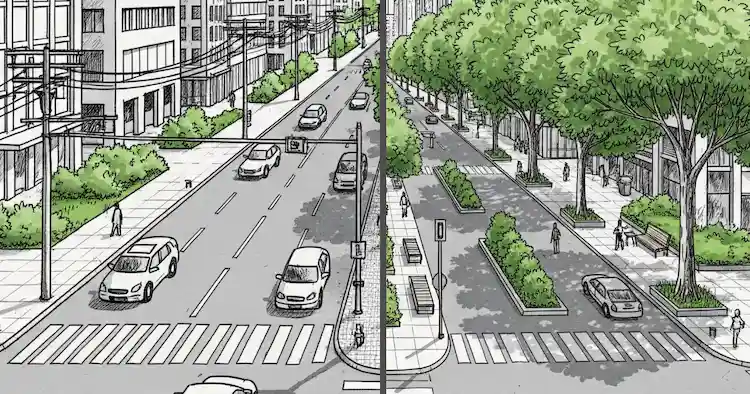
There’s also the challenge of policy: regulations don’t always directly support or require green alternatives. Changing policy can be fraught with political challenges, and there’s a perception that nature is messy or harder to maintain. In reality, many green solutions are designed to be low-maintenance, self-sustaining, and so lend themselves to being low cost solutions, not just more effective ones.
Then we come to the issue of equity. Often, the greenest areas of a city are the wealthiest. Achieving the full benefits of nature within a city means investing to ensure its throughout the city, not only in selective areas. Simply put, resilience shouldn’t be a luxury. Every community deserves access to clean air, cooling shade, and flood protection.
In short, we don’t need to choose between beauty and function, between people and nature. Done well, nature-based solutions serve everyone.
A New Vision for the Urban Future
The challenge of climate change will force us to ask: what are cities really for? Are they just machines for productivity and commerce, or can they also be places of care, of creativity and connection?
Imagine walking through a neighbourhood where buildings, alive with green features, contribute to cooling the tree lined street. Where former car parks are now gardens and where the sounds of nature compete with traffic. Where everyone has a green space nearby to enjoy and retreat to during those hot days.
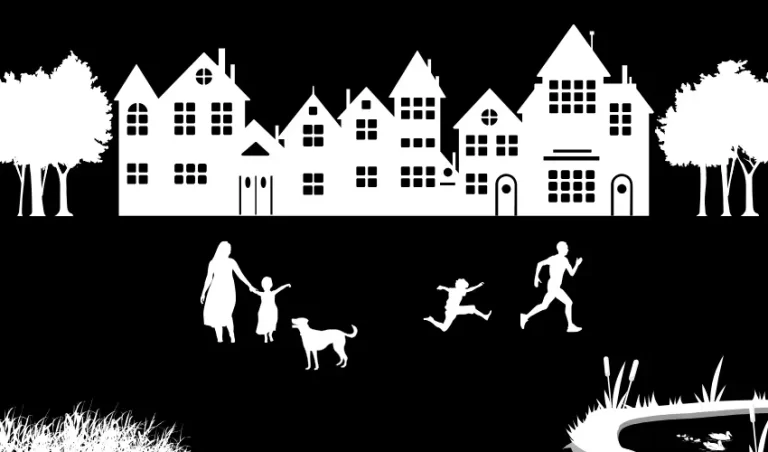
This isn’t wishful thinking. It’s already being designed, planted, and built in some cities, and a vision for what others could achieve. What we need now is to spread this outlook, support it, and shift our mindset from seeing nature as decoration to recognising it as essential infrastructure. If we do, then the impacts of climate change are certainly not going to disappear, but at least they’ll be more manageable as we move into a challenging future.
So What Can You Do?
We don’t have to be city planners to make a difference.
Show support for local greening projects. Encourage your council and politicians to invest in sustainable, nature-based infrastructure. If you have a garden, a balcony, or even a windowsill, plant something native. Talk about the value of nature in cities, not as a nice-to-have, but as a need-to-have.
Perhaps most importantly, spend time in the green spaces near you. Notice what they do for your body and your mind. These places are vital, not just for what they prevent, but for what they nurture.
Thanks for reading! If this resonated with you, feel free to share or sign-up to our newsletter below. I’d love to hear about any inspiring urban green spaces you’ve come across, big or small, ones that have shown you how beneficial they can be!
LG
Want more daily insights, tips & reflections on sustainability?
Follow us on our social media channels:
Finally, if you enjoyed this post, then we recommend you check out the following:
Why We Need to Spend More Time Outdoors