Teaching Climate Change: Key Topics and Activities
Climate change is shaping our world faster than ever. But for many educators, it can feel overwhelming to explain such a vast and sometimes complex topic to young people.
This guide breaks down the key topics to cover for students. We cover what each concept actually means, why it matters, along with some recommended activities to support the learning process. With each, a phrasing for different age groups is offered to help simplify the topics.
Learning Objectives to Target
In order to cover the topic of climate change, you should aim to help students understand the following aspects:
Guide Overview
This guide is set out as 5 recommended lesson topics, covering basic concepts through to applying an understanding of climate change in practice. For each of these lessons you will find:
For each of the key concepts explained, we provided a suggested alternative explanations better suited to two age groups: ages 7-10 and ages 11-14.
Suggested activities are also broken down into these two age groups to help support you shape your learning and lesson plans.
Lesson 1: What is Climate Change?
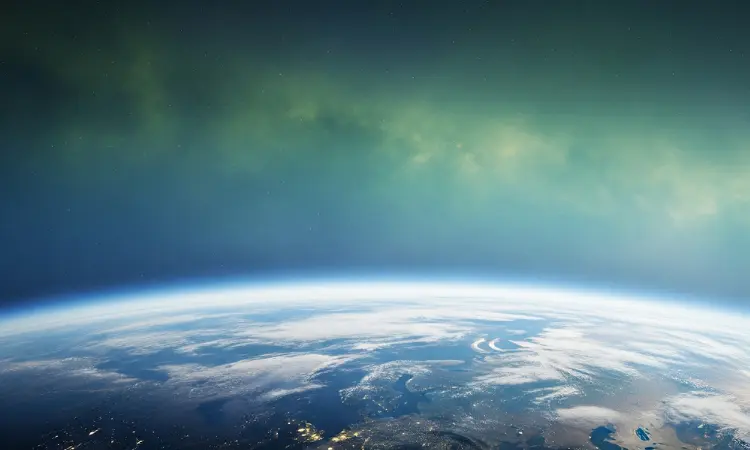
To kick off, your first lesson should cover the basics of what climate and climate change really means, along with two effects that influence this change: the greenhouse effect and global warming.
Below are definitions of these key aspects, both for you and versions better suited to your students. Understanding these provides an essential foundation for understanding climate change.
Key Aspects to Cover
Distinguishing Between Climate vs. Weather
Climate is the average of weather over a long time (30+ years). For example, London’s climate is temperate, while the Sahara Desert’s climate is arid.
Weather is short-term: today’s rain or next week’s forecast.
What Does Climate Change Mean?
This means the long-term changes in the average weather patterns of Earth. Unlike a single storm or cold week, climate change refers to trends over decades or centuries.
The Greenhouse Effect:
This is a natural process that keeps our planet warm. The Sun’s energy reaches Earth, and some of it bounces back into space. Gases like carbon dioxide (CO₂) and methane (CH₄) trap part of this heat, like a blanket around the planet.
Without this effect, Earth would be too cold for life, but when too many greenhouse gases build up, they trap too much heat, causing global warming.
Global Warming
Global warming refers to the steady rise in Earth’s average temperature, mainly because of human activities that add heat-trapping gases to the atmosphere, increasing the greenhouse effect. This warming influences the Earth’s climate, causing change to take place.
Learning Activities
Ages 7–10
Ages 11–14
Discussion Prompts
What do you already know about Climate Change?
Why do you think people sometimes confuse weather with climate?
Lesson 2: Why Is the Climate Changing?
In lesson 2, help students discover the main reasons why the climate is changing so quickly.
Look at how actions like burning fossil fuels, cutting down forests, and petrol/diesel cars put extra greenhouse gases into the air.
Link this to the prior lesson – highlighting that releasing these extra gases increases the greenhouse effect, leading to further global warming and, in turn, climate change.
Key Concepts to Explain
Fossil Fuels: What Are They & Why They Matter
Coal, oil, and natural gas formed from ancient plants and animals over millions of years. When burned for electricity, heat, and transport, they release greenhouse gases, particularly Carbon Dioxide (CO₂).
Carbon Dioxide (CO₂)
CO₂ is a colourless gas. It’s released when we burn fossil fuels or cut down trees.
CO₂ is the main greenhouse gas driving global warming on Earth.
Industrialisation
The growth of factories, machines, and mass production that began around 1750 and accelerated the use of fossil fuels, particularly CO₂. It has also accelerated deforestation.
Deforestation
Forests absorb CO₂ to live.
Many forests around the world are being steadily cut down for farming, for wood, and to develop the space for human development. Removing them both releases stored carbon and reduces Earth’s ability to soak up the carbon we release.
Suggested Activities
Ages 7–10
Ages 11–14
Discussion Prompts
Are there any good reasons why humans use so many fossil fuels? What are alternatives?
What could we use instead of fossil fuels?
Lesson 3: What’s Happening Around the World?
Next, take a journey around the world to see how climate change is affecting different places.
From melting ice in the Arctic to rising sea levels and stronger storms, cover real examples of how a warming planet impacts people, animals, and ecosystems.
Key Examples of Climate Change Taking Place
Melting Ice Caps
The Arctic and Antarctic regions are losing ice because warmer temperatures melt glaciers. This loss: raises sea levels, threatens the regional wildlife and reduces the Earth’s ability to reflect sunlight (a process called albedo that helps limit global warming).
Rising Sea Levels
When glaciers melt and oceans warm (water expands when heated), sea levels rise. This can flood coastal cities and islands.
Extreme Weather
Climate change increases the frequency and intensity of heatwaves, storms, droughts, and floods.
Biodiversity Loss
Warming, deforestation, and pollution threaten habitats and species. Plants and animals struggle to adapt to fast changes.
Suggested Activities
Ages 7–10
Ages 11–14
Discussion Prompt
How do you think communities in low-lying countries feel about rising seas?
How would you feel if your home was threatened by climate impacts?
Lesson 4: Closer to Home – Local Impacts
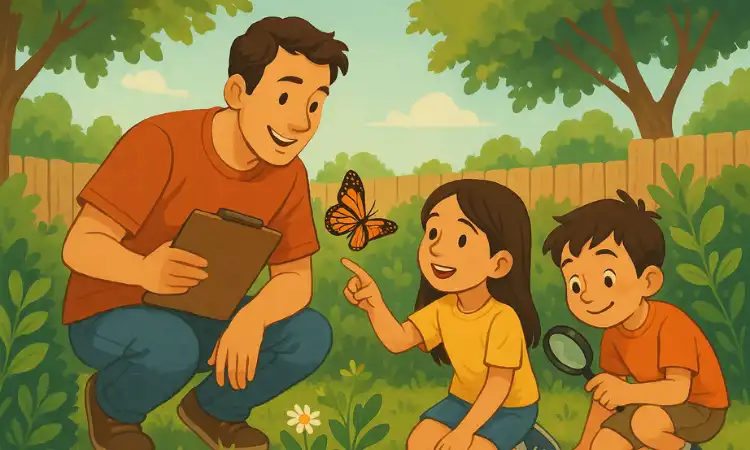
In lesson 4, zoom in on your own region to learn how climate change is affecting the local community.
Explore changes in local weather, wildlife, and the places we care about. You can also think about what these changes mean for us in our daily lives.
Key Localised Impacts to Consider
Urban Heat Islands
If you’re in a city or urban area, lots of concrete and little greenery absorb more heat. Consequently, they become hotter than surrounding areas. You may well have examples of this in your home or school – patches where you know its warmer and you can literally feel the heat coming from the walls!
Shifting Seasons
Perhaps Spring is arriving earlier in your region, or you’ve noticed winters are milder. This change affects plants, animals, and farming, who rely on seasons being predictable and consistent.
Local Wildlife Changes
Some species move north to stay cool. Others struggle as their habitats disappear. You may have new species locally, or some that you see less often. Changes to birds and insects are often common examples.
Suggested Activities
Ages 7–10
Ages 11–14
Discussion Prompt
“What changes have you noticed in the seasons or weather near your home?”
Lesson 5: What Can We Do About It?
Finally, focus on solutions to climate change.
Aim to teach and learn about the many ways people around the world are taking action to slow down climate change and protect the environment.
Explore ideas for saving energy, using renewable power, and making choices that help our planet. Finish by encouraging students to plan actions they could take to be part of the solution.
Key Actions to Cover
Using Renewable Energy
Renewable energy provides power that doesn’t run out and doesn’t emit greenhouse gases like carbon dioxide. This includes sources like solar panels, wind turbines, and hydroelectric energy.
Renewable energy is being adopted both on an industrial scale, reducing the impact of energy drawn from the local/national grid, and also in individual homes.
Energy Conservation
Conservation encourages using less energy in homes and other buildings, for example by turning off lights, insulating buildings, and choosing efficient appliances.
Sustainable Living
This means making day-to-day choices that reduce harm to the environment, like reducing waste, eating less meat, or using public transport.
Collective Action
Working together as communities, schools, or nations is a powerful tool to create bigger change.
Suggested Activities
Ages 7–10
Ages 11–14
Discussion Prompt
Which climate action feels easiest to do? Which feels hardest?
“What is one thing you want to start doing to help?”
Linking Climate Change To Other Subjects
Science: Carbon cycle, ecosystems, weather patterns
Geography: Climate zones, maps of climate impacts
Maths: Graphing temperature trends, calculating carbon footprints
English: Writing persuasive letters or climate stories
Art: Designing climate awareness posters and recycled art
IT & Computing: Researching climate data and creating digital presentations
Recommended Resources
Reflecting on Climate Learning
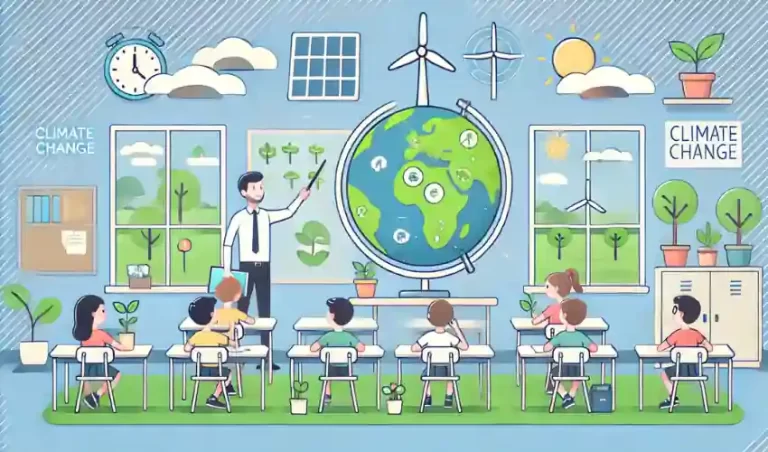
Climate change education is about more than quoting facts and figures. It’s about building empathy, critical thinking, and a sense of agency.
When you help students understand not only what’s happening but what they can do, you plant seeds of change.
The young people in your classroom today are key to the society of tomorrow that will help continue building towards a sustainable future and ensuring climate action continues.
To support you further, we also provide the following extra resources here at Greener Insights:
20 School Project Ideas to Teach About Climate Change
20 School Sustainability Project Ideas to Engage Students
Teaching Sustainability: Guide and Activities
20 School Nature Projects For Students
Finally, want more practical ideas and tips?
Check in here at Greener Insights for regular updates and follow us on our social media channels: